History of Durga Puja – Mahishasura Mardini – Markandeya Purana
Mahishasura Mardini
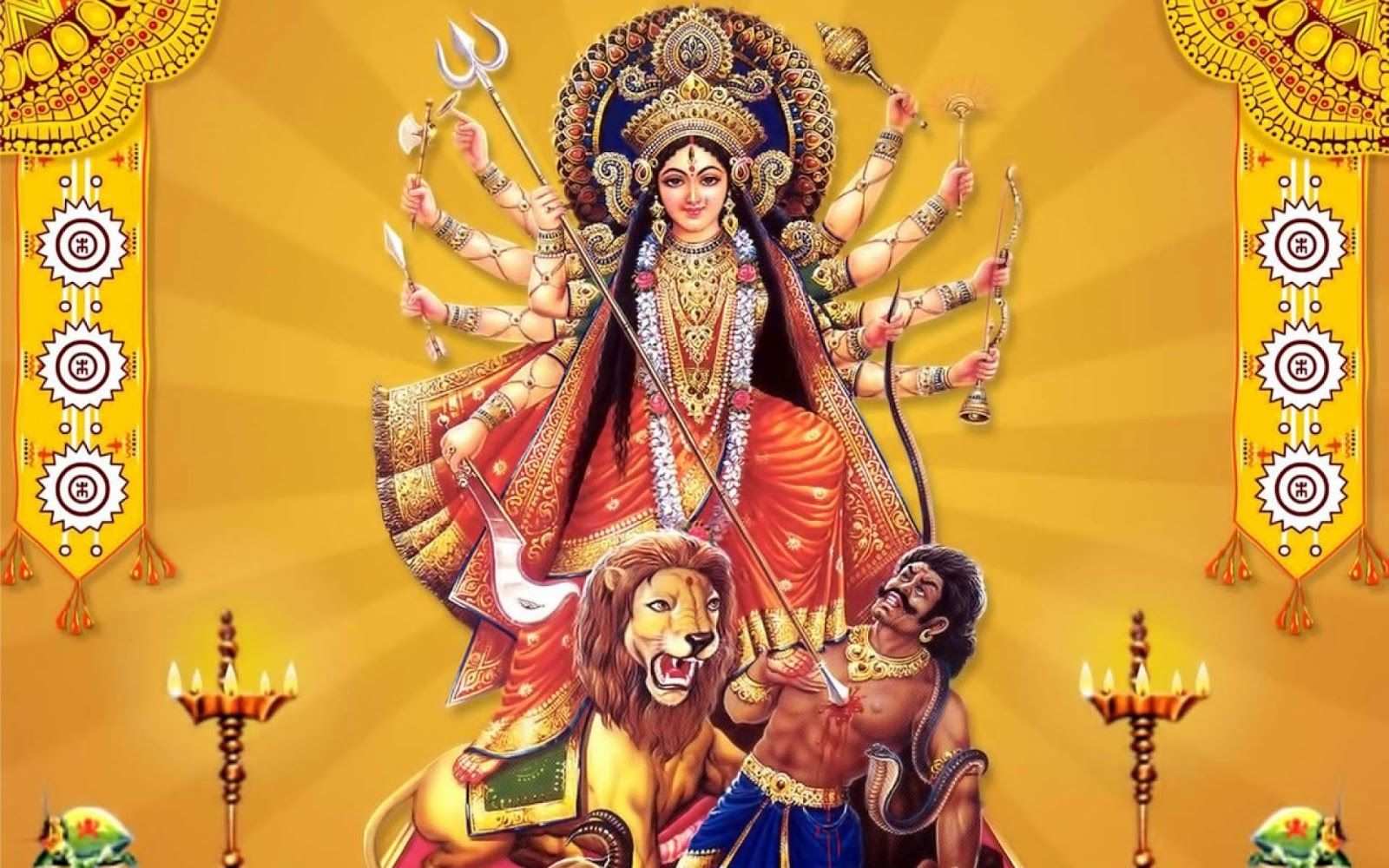
Mahishasura Mardini is one of the most powerful and beloved forms of Goddess Durga, whose name means “the slayer of Mahishasura,” the buffalo demon symbolizing arrogance and uncontrolled desire. The story is preserved in the Devi Mahatmya of the Markandeya Purana (5th–6th century CE) [1].
Rise of Mahishasura
-
Mahishasura gained a boon from Lord Brahma that no man or god could kill him.
-
With pride, he defeated the gods, seized heaven, and spread terror across the worlds.
Creation of Durga
-
To restore balance, the combined energies of the gods created Goddess Durga, the embodiment of Shakti.
-
Each god armed her with their weapon: Shiva’s trident, Vishnu’s discus, Indra’s thunderbolt, and others.
-
She rode a lion, symbol of strength and courage.
Battle and Victory
-
The fierce war with Mahishasura lasted nine days and nights.
-
The demon kept changing forms—buffalo, lion, elephant, and man.
-
On the tenth day, Durga struck him down, ending his reign of terror [1].
Symbolism and Legacy
-
This victory is celebrated as Vijaya Dashami or Dussehra, the triumph of righteousness over evil.
-
Mahishasura Mardini remains a symbol of courage and divine power.
-
She teaches that faith and inner strength can defeat even the darkest forces.
Beginning of ‘Sarbojanin’ Durgotsav
-
The festival took shape under royal patronage, with Raja Kangshanarayan of Taherpur (Nadia district, West Bengal, India) around 1580 CE often credited for holding one of the first grand Sharadiya Pujas. He blended Vedic rituals with local folk practices [2].
-
By 1790, the tradition moved to the people when twelve friends in Guptipara (Hooghly district, West Bengal, India) organized the first barowari Puja. This marked a shift from zamindari style celebration to public worship [3].
-
In the 19th century, during colonial Bengal, Durga Puja grew into a cultural platform. Literature, theatre and even nationalist ideas found space there, while Chandi Patha recitations and works like Chandi Mangal Kavya still stayed at the center [4].
-
In modern times the festival has grown into a global celebration of faith, art and community. Kolkata (Kolkata district, West Bengal, India) Durga Puja was added to UNESCO’s Intangible Cultural Heritage list in 2021 [5].
-
Even today, despite all changes, the heart of the festival remain in the daily chanting of the Devi Mahatmya, keeping its scriptural roots alive [1].
References
[1] Markandeya Purana – Devi Mahatmya. Sanskrit text with English translation.
[2] BN Mukherjee, Durga Puja in Bengal.
[3] S. Dasgupta, Religious Cults of Bengal.
[4] Tapan Raychaudhuri, Perceptions, Emotions, Sensibilities.
[5] UNESCO Intangible Cultural Heritage: Durga Puja in Kolkata (2021).